jueves, 13 de agosto de 2020
Last Second Heroics! Rumble at the Ranch HEAT HIGHLIGHTS | Kanoa & Tati vs Griff & Lakey
Athletes and Activism: Life Beyond the Jersey w/ Ace Buchan WSL PURE | One Ocean
miércoles, 12 de agosto de 2020
#Windsurf THE LAYBACK JUMP: JEM HALL
THE LAYBACK JUMP: JEM HALL

JEM HALL
MOVE ON UP – WINDSURFING TECHNIQUE
THE LAYBACK JUMP
In this technique article we throw our heads back for the layback jump. It’s a move which feels both weird and great, gives you better in-flight control, offers a great new perspective on jumping and also gives you a head start towards some of the backwards-rotating jumps which involve head movements.
PHOTOS –
Nicolas Jones
www.jemhall.com
(This feature originally appeared in the Jan/Feb 2020 issue of Windsurf Magazine. To read more features like this, Print and Digital subscriptions are available.
Essentially to achieve this move you are looking to perform a vertical jump trajectory and during same, pull the boom in and arch back to look straight behind you as you’re going up so you can check out the beach action, any photographers or your mate lying in the water!

You can really build up how much you lean back, and go more vertical, as you do more and gain more confidence, you will also become more oriented and furthermore your steering and landing skills will steadily improve.

Identify the ramp that you’ll be boosting your airtime on. Unhook and get over your board and open the sail in readiness for take-off. Ensure you lean back as you push down hard through the back leg to get the nose up. Begin to both lean and look back as you are about to leave the ramp, heading
slightly into the wind.

Throw your hips at the sail and keep your arms relatively straight. You need to really throw your head back and look back at the beach, aim to actually spot something you can see as this can really both help you and orientate you. Keep your eyes open as the sky flashes past you. Your legs should position the board in the air with the back leg pulling in and the front leg subtly pushing the nose off the wind to ensure the nose keeps across the wind –
i.e. that good old scissoring technique.

Now that you’re looking back and enjoying the view, you should begin to position the rig open and across you in order to aid steering off the wind for your descent. If you are enjoying the position then flex some more through straightening your arms further and grinding the boom with your crotch.

You haven’t got that much time to take in the view, so as you feel the board reach the apex and begin to fall it’s time to get your head up and start looking forward once again and push down on your front hand to get the nose down, and thereby tail up, so you are ready for landing. This will get the kit in a position to float down and not land like a pogo stick.

As you should be doing from all vertical jumps, continue to drop the nose and pull the tail up so that you land slightly tail-first. To assist in this the front arm pushes down on the boom and the back leg pulls up and in, as the front foot pushes the nose off. This pro-active early steering will help you float out of the sky and land with some momentum, rather than stopping dead. This works in both this move and all vertical jumps.

Look forward to spot your landing and continue steering the nose off the wind to get the wind under your board so you can be tucked until just before landing. Feeding the rig across, and subtly pulling it back you further helps steering and gets the wind in the sail for some winged parachute descent.

As you are about to land aim for a tail-first touchdown and try to get your tail upwind and nose downwind. Upon landing throw the rig forward and open for a quick getaway. Note: my rig should be more across me by now, naughty coach!
Kit:
Generous straps to allow feet to pop and steer the board well in the air. Long lines enable you to sail fast over bumpy water and facilitate easy unhooking from a low position. Flatter sails cut through the air better and are easier to steer. Medium to smaller freestyle wave or wave boards so they do not have too much windage in the air.
Conditions:
Small to medium sized waves with side to side-on wind so you can take off across the wind easily. The wave should be quite steep but not throwing as this can put you off balance when you need to be composed.

RRD boards, wetsuits & softwear, Ezzy sails & Black Project fins sponsor Jem Hall. Get him live and direct on one of his highly acclaimed coaching holidays – check out his site www.jemhall.com for the latest details. You can also follow him on twitter / Facebook / Instagram.
The post THE LAYBACK JUMP: JEM HALL appeared first on Windsurf Magazine.
Windsurf Magazine https://ift.tt/2XWhIJCKelly's Slater's BEST EVER WAVE at the Ranch?!! Rumble at the Ranch Quarterfinal HEAT HIGHLIGHTS
#Windsurf RRD FIRE 7.6 TEST REVIEW
RRD FIRE 7.6 TEST REVIEW

RRD FIRE 7.6

THE VERDICT
The Fire has changed focus slightly for 2020, maturing into a truly adaptable workhorse. From light wind freeride cruising to high-end blasting, it is equally happy fulfilling a number of roles across a wide tuneable wind range.

OVERVIEW
The Fire is in RRD’s Y25 range as their ‘Performance Freeride’ model, offering a wide base of nine sizes from 5.0m to 9.0m. The brief and focus of each size evolves though the series, from bump and jump in the smaller sizes right through to a twin-cam in the three largest sizes. This 7.6m is the largest no-cam option, fashioned with seven battens (many of which are tubed), a negative leech outline, double clew eyelets and reduced head size – all measures to improve handling and top end control. Rigged here on a Dynamic Pro Comp SDM (whilst still compatible with an RDM), it is easy to tune thanks to the marker in the top panel, (dubbed their “integrated trim system”) which helps to achieve the right amount of tension prescribed by RRD’s sail designer John Skye. And with a luff of 482 cm, it is certainly a tall sail, its size accentuated by the long boom length and concave leech outline. Displaying a moderate amount of luff curve amongst its peers, the Fire possesses a good amount of depth to its profile at rest, with all four lower battens exhibiting rotation around the mast. Sporting x-ply in the luff and clew panels, the rest of the Fire’s body is fabricated in monofilm, with a clean set and visually striking in its 25-year anniversary colours. Alternatively you can opt for the more monochrome orange livery.
BRAND CLAIM
“The ultimate in performance freeride … Lots of low end juice to get you up and moving quickly and plenty of control at the top end to hit top speeds with the GPS. This really is the perfect freeride solution.”
PERFORMANCE
We’ve had the chance to test the Fire’s iterations over several seasons now and have been impressed in how it has evolved. This year marks the biggest change in the series, no longer simply a no-cam performance range, but an extended line of sails whose structure alters through the sizes. Nevertheless, in this size, the remit for the Fire remains very much in line with the heritage set out by its predecessors. Bold and full-bodied in the hands from the off, this 7.6m possesses the largest dimensions of all the sails in the test group and develops the bottom end power to justify its form. As the pressure builds, the Fire pulls positively, its centre of effort locked firmly, yet positioned a little further back and focussed around the rider. As a result the power is tangible through both hands, giving the Fire a really balanced and comfortable nature. Using the upper clew eyelet to maximise the feedback supplied, the Fire’s power delivery is smooth and fluid, bestowing the sail with an alert yet accessible character. Applicable for the intermediate rider, it can partner the progressive freeride platform admirably, covering distance easily and powering consistently through varying winds and on all points of sail. As the wind increases, the Fire can be tuned with more tension to explore its freerace credentials – the side of this new Fire’s personality that is undoubtedly derived from its legacy. As the wind increases, the Fire comes alive, actively accelerating in gusts and generating the lift to help fly the board on its fin. The extra clew eyelet is an added bonus, encouraging a more compressed stance and enhancing its sense of control. It may not be as potent as some here in its top end performance, but what it loses in drag-racing efficacy, it more than makes up for with its newfound versatility. And whilst the size of the Fire is not lost in transition, the battens rotate tidily onto the new side, the power returning in a flowing predictable manner.
www.robertoriccidesigns.com
SPECS
Size: 7.6
Luff: 482 cm
Boom: 209 or 214 cm
Battens: 7
Ideal Mast: RRD 460 cm RDM / SDM
Available Sizes: 5.0, 5.7, 6.3, 6.8, 7.2, 7.6, 7.8, 8.4, 9.0.
PRICE: £764.00
OTHER SAILS IN TEST
DUOTONE E_PACE 7.3
EZZY CHEETAH 7.5
GA SAILS HYBRID 7.2
GOYA MARK PRO 7.2
GUNSAILS RAPID 7.2
LOFTSAILS OXYGEN 7.3
NEIL PRYDE SPEEDSTER 7.2
POINT-7 AC-X 7.5
RRD FIRE 7.6
The post RRD FIRE 7.6 TEST REVIEW appeared first on Windsurf Magazine.
Windsurf Magazine https://ift.tt/3kGXjSr#Windsurf POINT-7 AC-X 7.5 TEST REVIEW
POINT-7 AC-X 7.5 TEST REVIEW

POINT-7 AC-X 7.5 TEST REVIEW
THE VERDICT
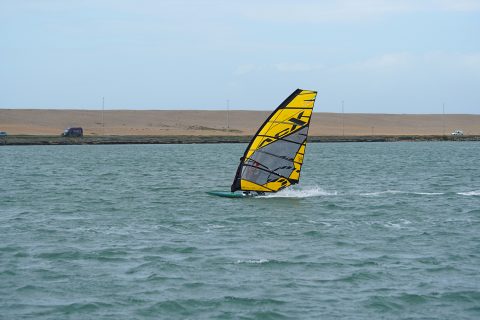
A drag racer’s dream, the AC-X delivers a level of performance that the most ardent slalom sailor would be happy with, yet requires minimal input. If you want to be the fastest around your local spot and make it look effortless, this sail could be the most coveted prize in your setup.
OVERVIEW
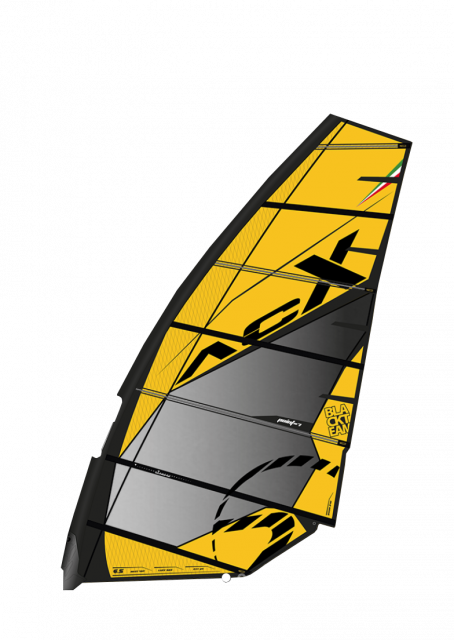
The AC-X bears the slogan ‘slalom no-cam’, providing race performance for “slalom speed seekers, who don’t like the hassle of cams.” It is available in two colour schemes for 2020 – the brand’s trademark black (code 823), or a more standout yellow (as tested here), carrying the code 7458. Another stated tweak for the new season is a remodelling of the profile, improving the speed of rotation and drive through the gybe. Rigged on a Black Prime 460 SDM, it is easy to rig, using the Quick Extension Tuning graphs along the foot of the sail to confirm the extension length required. Apply the downhaul and ‘the setting’ visual mark in the top panel provides guidance on the looseness required. There’s a good amount of curvature in the leading edge, but not as much as you might expect, the height of the AC-X (being the second tallest in the group), and its tapered outline giving it a high aspect appearance. Sporting tubed battens throughout, housed in lightweight anti-stretch x-ply pockets, the sail’s profile is decidedly flat at rest, with only the batten immediately under the boom cutout retaining any contact with the mast. And there is only one clew eyelet offered, said to be determined as the optimum position, to allow the leech to twist and open. It certainly displays a wealth of looseness right down to batten six! X-ply is employed in the foot and luff panel, with a new anti-UV transparent grey monofilm used in the window panel – fitting for a brand with penchant for anything stealth! The other additional panel worth mentioning is a thin slither of Dacron in the lower luff panel, but more of that when we discuss the on-water performance.
BRAND CLAIM
“If cambered sails are not your cup of tea, then the sheer performance specs and looks of the AC-X should be the one for you. Let the wind fill in the sail, and you’ll be smiling, seeing others eating your spray!”
AC-X zero20 from POINT-7 International on Vimeo.
PERFORMANCE
Using the term ‘no-cam slalom’ to describe the AC-X is quite a statement … yet having tried it on the water, we believe it’s fully justified! Flat and neutral in the hands at idle, it looks every bit its quoted size of 7.5m, yet feels composed and willing, the high skin tension galvanising its response to gusts as they hit. The initial pull of the AC-X comes from high in the sail, yet as pressure builds the sail’s low down Dacron luff panel expands and shifts the drive lower down the luff. As a result, the sail has both a fascinating and motivating nature. It powers quickly and smoothly, pulling the rider over the board, its low-cut foot encouraging the rider to lock it into a committed stance. Yet as the next gust hits, the movement in the lower luff pins the board to the floor and effortlessly accelerates as if finding another gear. And what is more, this happens automatically, requiring no input from the rider; all they need to do is hold on and enjoy the ride as they accelerate past their peers! You find yourself hunting for gusts and craving this rush of acceleration, knowing that you’re conserving energy as others wrestle their sails for the same result. It is quite an addictive sensation and encourages use of the AC-X in properly powered to overpowered conditions, sitting on top a thoroughbred freerace or slalom board. That is not to say it doesn’t work reasonably in light marginal winds, but it’s much like buying a Ferrari to potter round town and do your weekly shop in. In the turn the AC-X enters at speed and rotates effortlessly, but just maintain a low stance on exit to counter the high pull if speed is lost.
SPECS
Size: 7.5
Luff: 477 cm
Boom: 206 cm
Battens: 7
Ideal Mast: Point-7 460 SDM (RDM compatible)
Available Sizes: 4.7, 5.4, 6.0, 6.5, 7.0, 7.5, 7.9, 8.4, 9.0.
PRICE: £629.00
OTHER SAILS IN TEST
DUOTONE E_PACE 7.3
EZZY CHEETAH 7.5
GA SAILS HYBRID 7.2
GOYA MARK PRO 7.2
GUNSAILS RAPID 7.2
LOFTSAILS OXYGEN 7.3
NEIL PRYDE SPEEDSTER 7.2
POINT-7 AC-X 7.5
RRD FIRE 7.6
The post POINT-7 AC-X 7.5 TEST REVIEW appeared first on Windsurf Magazine.
Windsurf Magazine https://ift.tt/2DN0A1V#Windsurf NEIL PRYDE SPEEDSTER 7.2 TEST REVIEW
NEIL PRYDE SPEEDSTER 7.2 TEST REVIEW
NEIL PRYDE SPEEDSTER 7.2 TEST REVIEW
THE VERDICT
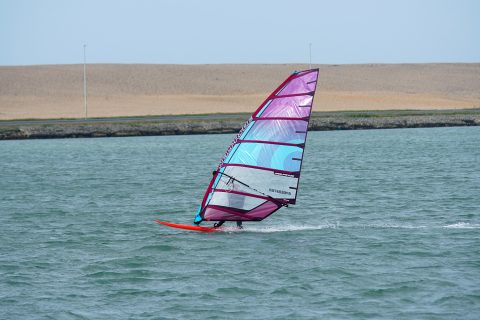
A new breed of no-cam freerace sail, whose bottom end capacity has been masterfully enhanced without detracting from its top end potency. Expensive, but has the look and feel of something special.

OVERVIEW
Delivering “slalom without cambers”, the Speedster finds itself in the Neil Pryde lineup once more, sandwiched between the familiar twin-cam V8 and the reinstated Ryde. With its outline and ‘Airflow’ batten orientation lifted directly from the RS:RACING EVO11, its focus is on performance and balanced handling, with tubed battens installed and two stepped clew-eyelet options to choose from. Available in two colour schemes, both of which are equally standout thanks to the brand’s exclusive custom printing technology, it was rigged here on a TPX100 SDM – a mast whose price tag may make your eyes water, but whose performance makes it somewhat justifiable. The sail we had on test was an early one from the production run and as a result had no dimensions or trim markers printed. But rest assured, as with the other 2020 sails tested, they will be present on the Speedster. Downhauling this 7.2m, it sets with a significant amount of luff curve, the leech falling away along its whole length, whilst the lower battens pull away to retain the softest touch with the mast. The sail’s profile is relatively flat at rest, with what shape there is being low down yet relatively far back, in line with the rider. Pryde’s quality design features are in place as usual, including the Fuse Pocket integrated battens, and laminated Forceline load distribution patches in key areas. It is a visually striking sail on land, but would its on water performance serve to match?
BRAND CLAIM
“More user friendly than a cambered sail (easier to rig, uphaul and gybe), the Speedster is more balanced, offering greater performance and wind range than a classic freeride sail.”
PERFORMANCE
In the past a typical no-cam freerace sail has provided nigh on the performance of a dedicated cammed slalom sail, in terms of top end control and efficiency, yet lacked the drive and power to get going in more marginal conditions. Times, it seems, have moved on and the Speedster is one of a new crop that really seems to walk the tightrope well. Downhauled with plenty of skin tension and looseness through the leech, it feels very light and neutral at rest, using the upper clew eyelet to increase the boom’s leverage and reduce its angle. Shallow in profile at rest, as a gust hits, the change in pressure is felt instantly, the stretch in the luff sleeve and movement in the panels allowing the power to be transferred to the board purposefully. The secret to the Speedster’s active nature is the position of the centre of effort: low but further back than most, it is centred around the rider and provides direct feedback through both hands. As the wind fills, the sail’s elastic limit is reached in a flash and whilst the pull isn’t grunty or overwhelming, with good technique it can be put to great effect. Even when powered, the depth of the Speedster’s draft is relatively slight, yet the drive and efficiency of the delivery through both hands is compelling. It is such an efficient sail, accelerating through gusts as if it has no limit. As such, it needs to be partnered with a board and fin that has the capacity to keep up with it, otherwise the Speedster’s appetite to keep charging will start to manifest in control issues. With excellent natural range on one setting, the addition of the dropped inset clew eyelet only serves to extend the Speedster’s top end appeal for the blasting enthusiast. And in transition, the light balanced handling of the Speedster bolsters the rider’s courage to enter with speed and conviction, rotating fluidly and powering up quickly on the new tack.
SPECS
Size: 7.2
Luff: 467 cm
Boom: 200 / 206 cm
Battens: 7
Ideal Mast: Neil Pryde 460 cm SDM
Available Sizes: 5.2, 5.7, 6.2, 6.7, 7.2, 7.7, 8.2.
PRICE: £759.00
OTHER SAILS IN TEST
DUOTONE E_PACE 7.3
EZZY CHEETAH 7.5
GA SAILS HYBRID 7.2
GOYA MARK PRO 7.2
GUNSAILS RAPID 7.2
LOFTSAILS OXYGEN 7.3
NEIL PRYDE SPEEDSTER 7.2
POINT-7 AC-X 7.5
RRD FIRE 7.6
The post NEIL PRYDE SPEEDSTER 7.2 TEST REVIEW appeared first on Windsurf Magazine.
Windsurf Magazine https://ift.tt/3ajjdq2#Windsurf LOFTSAILS OXYGEN 7.3 TEST REVIEW
LOFTSAILS OXYGEN 7.3 TEST REVIEW

LOFTSAILS OXYGEN 7.3 TEST REVIEW

THE VERDICT
The Oxygen continues to impress, achieving the alchemy and balance between smart refined power, crisp handling and a real ease of use.

OVERVIEW
The Oxygen sits in the Loftsails range for another season as their no-cam freerace offering, with a healthy 10 sizes in their range, available in two
colourways – blue as well as the orange tested here. Rigged on a Team Edition 460 cm SDM, it sets with plenty of luff curve, downhauling the sail so that the looseness in the top panel reaches the forward positioned trimming guide. The twist extends down much of the leech, down to the end of the cross batten, just above the two inset clew eyelets. Build quality is on par with the best, with a large extended x-ply foot panel to compliment the x-ply luff, clew and leech panels, creating a perimeter around the monofilm window and upper panel. All the usual Loftsails detailing is in place, including a large ‘easy-open’ moulded tack fairing, full-length beading on both sides of the bottom two battens, integrated battens (many of which are tubed), and the use of Dacron in the head panel to mitigate any damage whilst rolling. Tensioned according to the trim marker, the Oxygen displays moderate to good shaping low down in its draft, yet remains relatively flat above the boom, the three lower battens rotating easily around the mast.
BRAND CLAIM
“Oxygenate your windsurfing!” Monty Spindler.
PERFORMANCE
With a long luff and boom, the Oxygen looks every bit its quoted size, yet feels balanced and poised in the hands. There’s plenty of skin tension in the leading edge and as pressure builds the movement in the luff sleeve enables the draft to pull away quickly and the profile to deepen. It has an impressive amount of bottom end power as a result, more immediate and crisp than some and certainly more focussed. Accelerating quickly, the Oxygen’s foot is low-cut, letting the sail rock back into a secure committed stance. The pull comes from low and forward in the draft, helping to pin the board down and accelerate in the gusts. There is simply nothing soggy or deferred in the delivery style, but neither is it demanding or challenging to handle for the novice rider. Instead, it has that wonderful quality of becoming physically lighter in the hands as a gust hits, transferring its energy efficiently into the board and inspiring the rider to drive harder, focussing on the board’s trim. As the conditions strengthen, the Oxygen demonstrates a fantastic range on just one setting, but you can relax in the knowledge that you have the extra tuning advantage of the second, lower eyelet. Orientating the boom with more rake helps to encourage a more compact locked in stance, furthering resolve and control. And the Oxygen certainly rises to the challenge, its stability unwavering and twist profile superbly engineered, leaving no room for any flutter. In these conditions, the sail’s manners combined with its low and forward drive make it a pleasure to use in transition, entering in a controlled manner and helping to keep the board pinned naturally to the water’s surface. A real all-rounder with excellent natural range and crisp accessible power.
SPECS
Size: 7.3
Luff: 474 cm
Boom: 212 cm
Battens: 6
Ideal Mast: Team Edition 460 cm SDM
Available Sizes: 4.6, 5.3, 5.8, 6.3, 6.8, 7.0, 7.3, 7.8, 8.5, 9.5.
PRICE: £659.00
OTHER SAILS IN THE TEST
DUOTONE E_PACE 7.3
EZZY CHEETAH 7.5
GA SAILS HYBRID 7.2
GOYA MARK PRO 7.2
GUNSAILS RAPID 7.2
LOFTSAILS OXYGEN 7.3
NEIL PRYDE SPEEDSTER 7.2
POINT-7 AC-X 7.5
RRD FIRE 7.6
The post LOFTSAILS OXYGEN 7.3 TEST REVIEW appeared first on Windsurf Magazine.
Windsurf Magazine https://ift.tt/2POz078#Windsurf GUNSAILS RAPID 7.2 TEST REVIEW
GUNSAILS RAPID 7.2 TEST REVIEW
GUNSAILS RAPID 7.2 TEST REVIEW

THE VERDICT
Effortless to tune and with real range in its riding style and application, the Rapid provides an excellent all-round performance, and at this price it simply can’t be ignored.

OVERVIEW
The Rapid is Gunsails’ no-cam freerace sail, sitting between the freeride Stream and twin-cam Exceed in the brand’s extensive range. For 2020 the Rapid’s weight is said to have been brought down, using Kevlar tendons to control panel profiles and movement, whilst the luff sleeve has been enlarged to improve rigging ease. Tested here on a Select 460 cm SDM, it sets easily, using the F.R.E.D. marker as a guide, the tack pulley oriented to mitigate any unnecessary friction. There is plenty of looseness all the way down the leech, reinforced by mini-battens along its whole length, before using the two distinct clew eyelet positions to vary power delivery. There’s also plenty of rotation in the lower battens, whilst all seven are said to be tube-battens, adding to the impression of detailing included in the Rapid. There’s beading along the lengths of both bottom battens, abrasion pads throughout, a padded tack fairing and x-ply in the vulnerable head and foot panels. It’s a well thought out product and at the exchange rate as we go to print, comes in at just over £460.00. On paper it looks like cracking value for money, so let’s get it on the water and check its performance.
BRAND CLAIM
“How to combine slalom with effortless freeriding? The solution is the Rapid. The easy handling of a no cam sail within an ambitious 7-batten slalom outline.”
PERFORMANCE
Using the upper clew eyelet extends the Rapid’s boom length to 209 cm as well as raising the boom geometry. As a result the power produced in light marginal winds is significant, the moderate luff curve and expansion in the Dacron luff panel helping to amplify the sail’s pumping efficiency. Accelerating smoothly in the hands, the energy delivered is easy and balanced in the hands, allowing the Rapid to be locked into a comfortable stance. It feels large and full bodied, generating the drive to furnish any widestyle freeride platform; yet there’s an ease and practicality to the delivery too, the sail breathing into life and powering in a measured manner, so as to not unsettle the rider’s stance. There’s a good natural range to the Rapid’s setting too, downhauling the sail to F.R.E.D. and using the upper eyelet for light airs, or dropping to the lower clew eyelet for strong winds. Changing to the more inset eyelet makes a big difference, the extra boom rake and increased twist in the leech enhancing control and predictability. Its performance comes easy, requiring little technical input of effort from the rider and whilst it may not possess the slippery efficiency of the no-cam slalom sails in the test, the ease in which its performance is achieved makes it more than enough for most recreational blasters. In transition the Rapid’s speed and manners can be used to enter corners confidently, the movement in the Dacron luff panel helping the sail to de-power easily mid-transition as the battens rotate smoothly. This movement is also a real asset in unforgiving seas, the sail moving around the rider and helping them to remain comfortably locked in their stance, covering distance without expending too much energy.
SPECS
Size: 7.2
Luff: 468 cm.
Boom: 200/209 cm.
Battens: 7
Ideal Mast: Gunsails 460 cm SDM.
Available Sizes: 5.7, 6.2, 6.7, 7.2, 7.9, 8.6.
PRICE: €509.00
OTHER SAILS IN TEST
DUOTONE E_PACE 7.3
EZZY CHEETAH 7.5
GA SAILS HYBRID 7.2
GOYA MARK PRO 7.2
GUNSAILS RAPID 7.2
LOFTSAILS OXYGEN 7.3
NEIL PRYDE SPEEDSTER 7.2
POINT-7 AC-X 7.5
RRD FIRE 7.6
The post GUNSAILS RAPID 7.2 TEST REVIEW appeared first on Windsurf Magazine.
Windsurf Magazine https://ift.tt/3ak3mb5#Windsurf GOYA MARK PRO 7.2 TEST REVIEW
GOYA MARK PRO 7.2 TEST REVIEW
GOYA MARK PRO 7.2 TEST REVIEW

THE VERDICT
The Mark Pro combines an involving high-adrenaline nature with a level of control that can’t help but inspire even the most timid pilot. With an excellent natural range, it’s worth deciding your mast diameter according to your individual riding style.

OVERVIEW
The Mark is in the Goya lineup for another season, denoted as their six-batten freerace option. The 7.2m is the third largest in the range and sports the same dimensions as its predecessor. It is also actively promoted this season as compatible for use with RDM and SDM, and as luck would have it, we have both to test it with this year, the sail sent with the Hundred Pro in RDM and SDM. Rigging is uncomplicated, thanks to the guidance provided by the visual dot at the tip of the top panel’s mini-batten, and the fact that only one clew eyelet is offered. Whichever mast diameter is used, the three lower battens retain rotation around the mast, the draft locked forward whilst the leech falls away progressively along its length. It really does have a stunning set, without a blemish or crease in any of the panels. X-ply is utilised in the luff and foot panels, leaving the brand’s preference Mono-Ply Film (MPF) in the window panel, and coloured monofilm around its perimeter to complete the visual impact. Sporting alternating battens, and the brand’s familiar carbon stretch control tendons, it is certainly standout in its new neon yellow/fuchsia get-up, the colours reversed to make even more of a statement for the all x-ply Mark Pro X version. And as with the Banzai and Nexus tested earlier this season, the Mark Pro will remain unchanged for two seasons, making this exact sail current for 2021 as well.
BRAND CLAIM
“Delivering impressive low end torque and acceleration combined with easy handling when super powered, the Mark Pro allows you to focus on your line and tactics rather than managing your sail.”
PERFORMANCE
Rigging the Mark Pro on the SDM provided initially, it feels small in the hands at rest, the short boom and high skin tension making the feedback pinpoint precise. It nevertheless has a useful bottom-end in marginal winds, tuned with slightly less tension and responding positively to the energy and input from an active rider. Accelerating rapidly, it settles into a comfortable locked in position, the high boom rake helping to contribute to the sense of control, whilst the sail’s immediacy in response really keeps the rider engaged and involved. In comfortably powered conditions, a little more downhaul brings the looseness to the marker in the top panel and settles any draft movement, fine-tuning the sail’s profile depth and power delivery on the outhaul. As such, the Mark Pro displays excellent natural range on this single setting, pulling through lulls well and actively accelerating in the hands during gusts. The centre of effort is focussed low down in the sail, but a little further back than some, helping to deliver useable feedback through the back hand. In this respect, it has a similar character to the Banzai and Nexus tested earlier this season – a crisp and involving ride that gives the rider the power the instant it is required. Partnered with a fast freerace or slalom board, it offers the impetus and drive to drag race in confidence, finding particular favour with those that thrive on participating rather than just going along for the ride. And this is also true in transition, the Mark Pro’s energy spurring the rider on during entry, its short raked boom helping rig movement mid-transition and encouraging the rider to keep their weight low. For lighter riders or those with a more passive sailing style, changing the mast to an RDM could be a solution, the mast response more gradual, which, coupled with the extra breathability in the luff sleeve softens the directness of the delivery. You do need to apply extra downhaul and outhaul tension in powered conditions, yet the feedback is more sympathetic and tempered, proving particularly welcome in choppy coastal seas.
SPECS
Size: 7.2
Luff: 467 cm
Boom: 202 cm
Battens: 6
Ideal Mast: Goya 460 cm RDM or SDM
Available Sizes: 5.4, 5.8, 6.2, 6.6, 7.2, 7.8, 8.5.
PRICE: £679.00 X: £749.00
OTHER SAILS IN THE TEST
DUOTONE E_PACE 7.3
EZZY CHEETAH 7.5
GA SAILS HYBRID 7.2
GOYA MARK PRO 7.2
GUNSAILS RAPID 7.2
LOFTSAILS OXYGEN 7.3
NEIL PRYDE SPEEDSTER 7.2
POINT-7 AC-X 7.5
RRD FIRE 7.6
The post GOYA MARK PRO 7.2 TEST REVIEW appeared first on Windsurf Magazine.
Windsurf Magazine https://ift.tt/3kGzJoQ